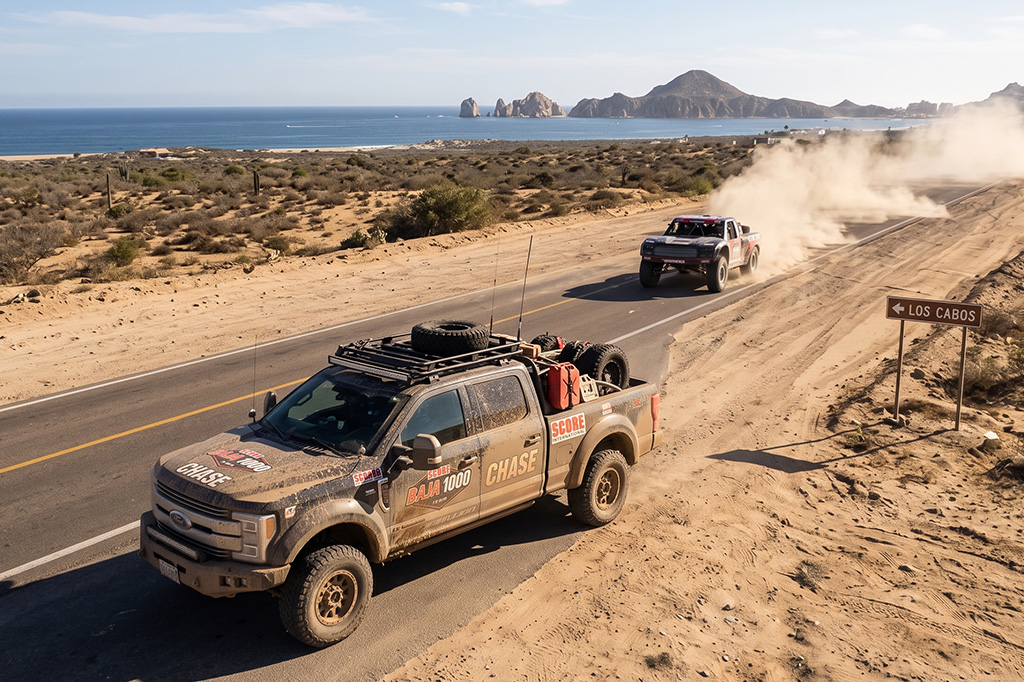
For the first time in its 59-year history, the SCORE Baja 1000 will be run entirely in Baja California Sur. The 2026 race starts and finishes in Los Cabos and runs November 9 to 15, 2026. That is a big change for anyone who is used to watching the start in Ensenada, and it turns race week into one of the longest road trips on the peninsula.
If you are racing, chasing, or just going to watch, here is what you need to know about getting there by road, keeping your support vehicles covered, and crossing the border without losing a day.
2026 Baja 1000 at a glance
- Race: BFGoodrich Tires 59th SCORE Baja 1000
- Dates: November 9 to 15, 2026 (race week; the green flag typically drops late in the week)
- Start and finish: Los Cabos, Baja California Sur
- Course: Loop format entirely within Baja California Sur; the official map is published by SCORE International in the weeks before the race
- Distance from San Ysidro to Cabo San Lucas: roughly 1,000 miles via Mexico Highway 1, or about 18 to 20 hours of driving
Driving from the border to Los Cabos
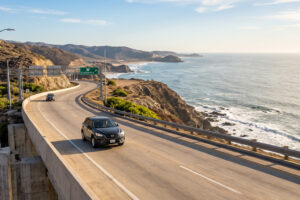
Most teams and fans will cross at San Ysidro, Otay Mesa, or Tecate and take Highway 1 the length of the peninsula. Plan on two to three days each way. The road is paved the whole way but is mostly two lanes with no shoulder, and there are long stretches with no services. A realistic schedule looks like this:
- Day 1: Border to San Quintin or El Rosario (about 4 to 5 hours). Fuel up in El Rosario; the next reliable gas is more than 200 miles south.
- Day 2: El Rosario to Guerrero Negro or Santa Rosalia (6 to 8 hours). You cross into Baja California Sur at Guerrero Negro, where there is an agricultural checkpoint and the time zone changes to Mountain Time.
- Day 3: Santa Rosalia to Loreto, La Paz, and on to Los Cabos (7 to 9 hours). The Loreto to La Paz stretch is long and remote.
Drive in daylight only. Cattle on the road, unmarked topes (speed bumps), and washouts are the most common causes of accidents on Highway 1, and none of them are visible at night.
Do you need a vehicle import permit?
No. The entire Baja peninsula, including Baja California Sur, is a free zone. You do not need a Temporary Import Permit (TIP) from Banjercito to drive to Los Cabos. You will need one only if you put the vehicle on the ferry to the mainland.
You do need an FMM tourist permit if you will be in Mexico more than seven days, which almost everyone attending race week will be. The 2026 fee is 983 pesos (about $54 USD), paid at the INM office at the border. Get it stamped on the way in. Read our full guide to the documents you need to drive to Mexico before you leave.
Insuring chase, support, and pre-run vehicles
This is the part race teams get wrong most often. A Mexican auto insurance policy covers your vehicle on maintained roads. It does not cover a vehicle while it is on the race course, pre-running, or anywhere off pavement and graded roads. That applies to the race car and to any chase truck that leaves the highway to reach a pit.
What the policy does cover, and what you absolutely need, is every mile between the border and Los Cabos and every mile back. That is 2,000 miles of Highway 1 for each vehicle in your convoy. A liability-only policy is the legal minimum. Full coverage adds collision, theft, and vandalism for the vehicle itself, which matters when a truck is parked in a pit area or a hotel lot for a week.
A few practical points for teams:
- Insure every vehicle separately, including the tow rig, the chase trucks, and the motorhome. One customer’s race team insures about eight vehicles at a time for their trips.
- Declare trailers and towed vehicles on the policy. An undeclared trailer voids coverage for both vehicles.
- Buy a policy that covers the full trip, not just race days. A 10 to 14 day policy is typical for the Baja 1000. If you get home early, unused days can be refunded when you return the original policy to any Baja-Mex location.
- If your race vehicle rides on a trailer, the trailer must be declared on the tow vehicle’s policy or the policy is void. The race vehicle itself is not covered while it is on the trailer; Mexican auto policies exclude property carried in or on the insured vehicle. Ask us if you are unsure how to list your rig.
See our guide to insuring trucks, RVs, and trailers for the details on larger vehicles, or get a multi-day Mexican auto insurance quote online in about two minutes.
Crossing the border during race week
Southbound traffic builds the weekend before race week as teams and fans head down. With the race in Los Cabos rather than Ensenada, the crush at San Ysidro should be lighter than in past years, but the Friday and Saturday before November 9 will still be busy. Tecate is the calmest crossing if you are already east of San Diego, and it puts you on Highway 3 to Ensenada with no Tijuana traffic.
Northbound is the bigger problem. Everyone comes home in the same three-day window after the finish. If you can leave a day early or stay a day late, you will save hours at the line. Ready Lane and SENTRI move fastest; make sure everyone in the vehicle has a compliant document.
Race week checklist
- Passport or passport card for every person in the vehicle
- FMM tourist permit, stamped at INM on entry
- Mexican auto insurance policy for every vehicle, printed, covering the full trip
- Vehicle registration and, for financed vehicles, a permission letter from the lienholder
- Pesos for tolls, fuel, and food. Exchange dollars for pesos before you leave at any Baja-Mex location; rates in Cabo are worse.
- Extra fuel, water, a full-size spare, and a tire plug kit for Highway 1
- Downloaded offline maps; cell coverage disappears for hours at a time
For a shorter test run, our Baja 400 race week guide covers the Ensenada version of all of this. Baja-Mex has been insuring race teams and Baja travelers for 51 years from our locations in San Ysidro, Otay Mesa, and Tecate. Stop by on the way down, or buy online and print your policy before you leave.
Coverage is subject to the terms, conditions, and exclusions of the policy. See your policy documents for details.