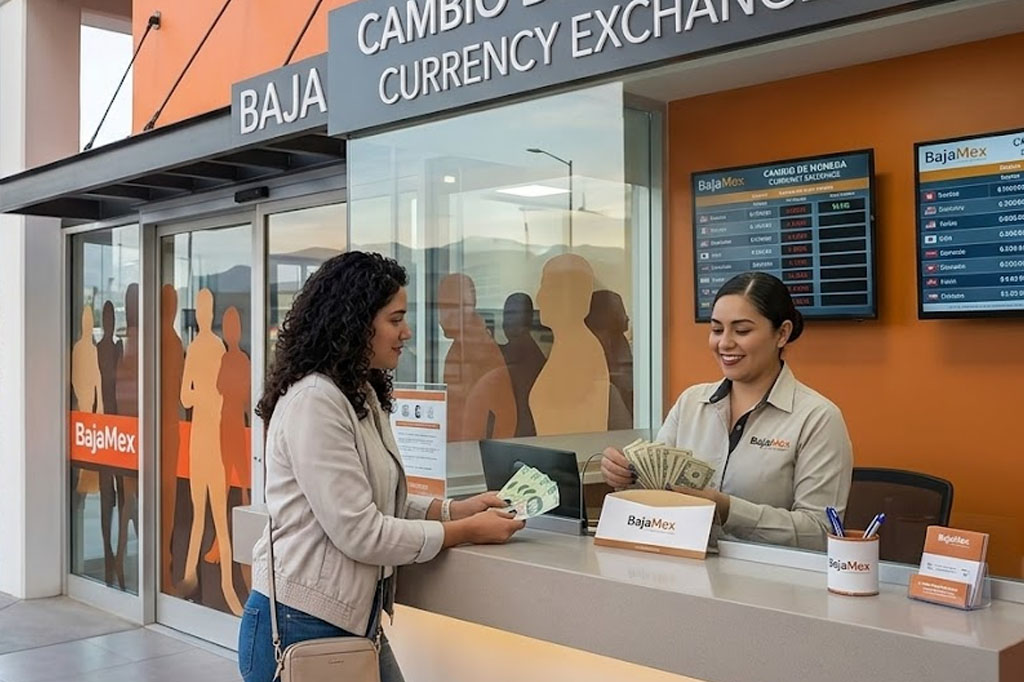
If you’re driving to Mexico from San Diego, exchanging your dollars to pesos before you cross the border is one of the smartest things you can do. You’ll get better prices at restaurants, shops, and markets, and you won’t have to worry about unfavorable exchange rates from street vendors or tourist traps on the other side.
Here’s what you should know about exchanging currency at the border.
Why Exchange Before You Cross?
Most businesses in Tijuana, Rosarito, and Ensenada will accept US dollars, but the exchange rate they give you is almost always worse than what you’d get at a dedicated currency exchange. A restaurant might round the rate down to 15 pesos per dollar when the actual rate is closer to 17 or 18. Over a full day of spending, that difference adds up quickly.
Exchanging at a reputable location on the US side gives you a fair, transparent rate with no surprises. You’ll also avoid the hassle of doing math on the fly every time you make a purchase.
Where to Exchange Currency Near the Border
At the border crossing: Baja-Mex operates currency exchange windows at several San Ysidro locations, right near the border. You can exchange USD to MXN on your way south and convert your leftover pesos back to dollars on your way home. No appointment needed, no service fees, and competitive rates.
Banks: US banks can exchange currency, but most require you to be an account holder and may need a day or two of advance notice. The rates are usually fair but the convenience isn’t there for a spontaneous border trip.
ATMs in Mexico: You can withdraw pesos from ATMs in Tijuana and other Mexican cities. The exchange rate is usually close to market rate, but your bank will likely charge a foreign transaction fee (typically 1 to 3%) plus a per-withdrawal fee. The Mexican ATM may also charge its own fee on top of that. If you go this route, withdraw a larger amount at once to minimize per-transaction fees.
Street vendors and informal exchangers: You’ll see people near the border and in tourist areas offering to exchange money. Avoid this. Rates are poor, and the risk of counterfeit bills or short-changing is real.
How Much Should You Exchange?
Day trip to Tijuana: For a day of eating, shopping, and getting around, $50 to $100 USD worth of pesos is usually plenty. Most restaurants and shops in Tijuana also accept cards, but smaller vendors and taco stands are cash-only.
Weekend trip to Rosarito or Ensenada: Plan for $100 to $200 USD in pesos for meals, tips, tolls, gas, and activities. Hotels and nicer restaurants will accept credit cards, but you’ll want cash for smaller purchases, street food, and markets.
Extended trip: If you’re staying a week or longer, exchange a few hundred dollars to start and use ATMs as needed for the rest. Carrying large amounts of cash isn’t necessary or recommended.
Tip: Always keep a small amount of pesos on hand for tolls on the Tijuana-Ensenada toll road. Toll booths accept pesos and sometimes US dollars, but having pesos ensures you’re not overpaying.
Tips for Handling Money in Mexico
Tipping. Tipping culture in Mexico is similar to the US. At restaurants, 15 to 20% is standard. For hotel staff, valets, and other service workers, 20 to 50 pesos is appreciated. You can tip in either dollars or pesos, but pesos are generally preferred since workers don’t have to exchange them.
Credit cards: Visa and Mastercard are widely accepted at hotels, larger restaurants, gas stations, and shops. American Express is less common. Always pay in pesos when given the choice at the terminal. Choosing “pay in USD” triggers dynamic currency conversion, which gives you a worse rate than your bank would.
Counterfeit awareness: When receiving change in pesos, glance at the bills. Mexican currency has several security features including watermarks, color-shifting ink, and transparent windows. Large denominations (500 and 1,000 peso bills) are occasionally counterfeited. If a bill feels wrong, politely ask for a different one.
Converting pesos back to dollars: Heading home with leftover pesos? Baja-Mex buys back Mexican pesos and converts them to USD at our San Ysidro locations. Much easier than trying to deposit foreign currency at your bank.
Exchange Currency and Get Insured in One Stop
Baja-Mex has been serving travelers at the San Ysidro border since 1974. Stop by on your way to Mexico to exchange currency, purchase your Mexican auto insurance, and even park your car in our secure border lot if you’re walking across.
Everything you need for your trip in one convenient stop.